
Vision, Mission, and Identity
Praboromarajchanok Institute
Vision
“World Class University for Primary Care"
Mission
Wisdom for Community
Institutional Identity
Providing health services with a humanistic heart, upholding the principle of benefiting humanity first.
Graduate Moral Identity
Discipline, Duty, Unity, Sacrifice, Integrity, and Gratitude
Faculty of Nursing
Vision
“To be a leading international nursing faculty in producing professional nurses and serving as a learning organization that drives innovation in primary health care.”
Mission
Wisdom of Community for Community
อัตลักษณ์
Discipline, Duty, Unity, Sacrifice, Integrity, Gratitude, and a Humanistic Service Mind
Boromarajonani College of Nursing, Phayao
Vision
A leading institution responsive to the health system, recognized internationally.
Mission
Committed to developing people, cultivating wisdom, and advancing health.
Graduate Identity
“Humanistic Health Care”
This reflects compassionate, family-like care characterized by kindness, empathy, understanding, and attentiveness to patients' concerns. Care is delivered holistically—addressing physical, mental, spiritual, and social needs—aligned with the expectations and well-being of both patients and their families, beyond the routine fulfillment of duty.
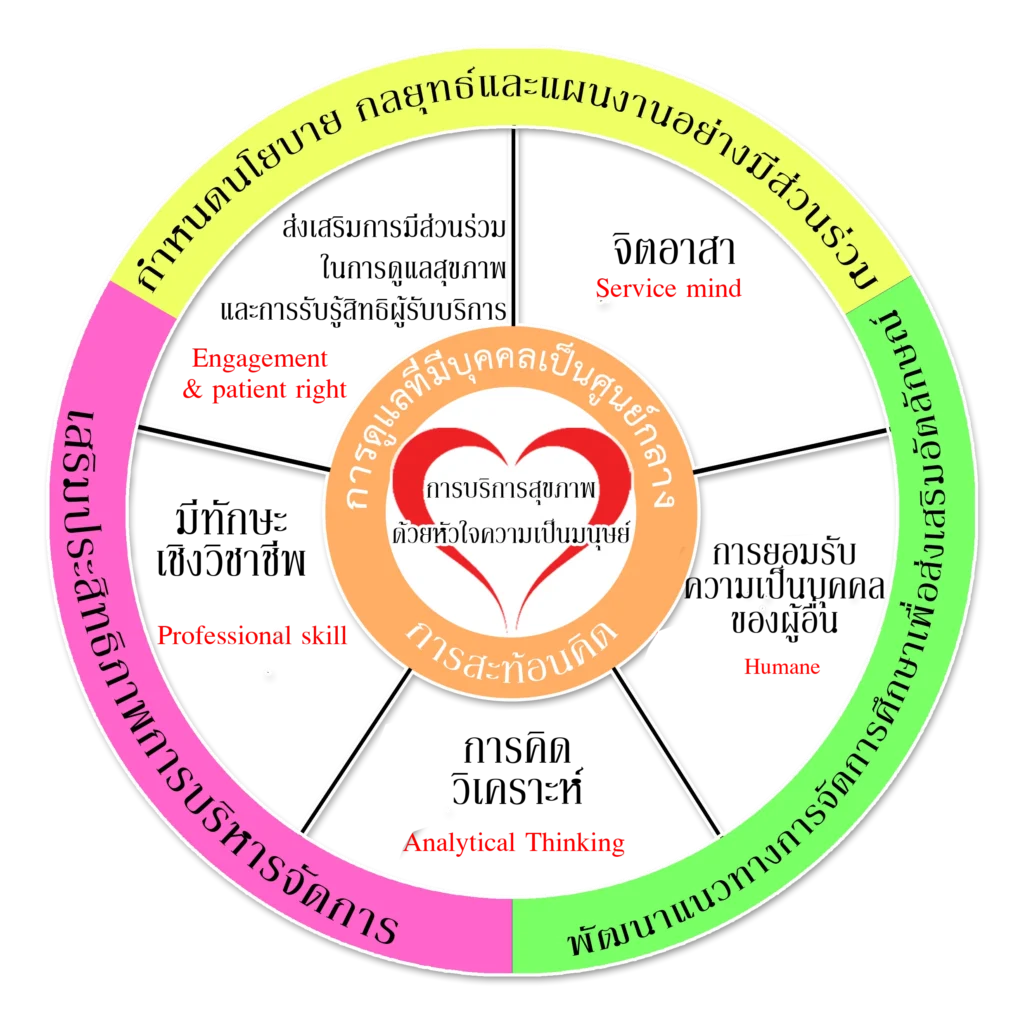
Graduate Identity Framework: SHAPE The humanistic graduate identity comprises five core components, represented by the acronym SHAPE:
1. S – Service Mind A spirit of volunteerism: generosity, selflessness, empathy, attentiveness, and willingness to help others with genuine concern.
2. H – Humane Respect for others as individuals: demonstrated through polite behavior, appropriate communication, friendliness, humility, and pleasant demeanor.
3. A – Analytical Thinking The ability to think critically and plan problem-solving by gathering information systematically, aligned with real-life needs and contexts, using evidence-based academic knowledge.
4. P – Professional Skill Competent and accurate application of professional skills according to nursing standards, sensitivity to patients' emotional needs, and timely decision-making in patient care.
5. E – Engagement and Patient RightsPromoting participation in health care and awareness of patient rights: providing health information, seeking relevant knowledge, and enabling patients to learn and make informed decisions about their own health.